


For most of 2025, advertising kept moving as if nothing had changed. Campaigns launched on time. AI tools accelerated production. Media plans were optimized to perfection. And yet, something fundamental shifted: audiences stopped taking advertising at face value.
This wasn’t a rejection of brands.
It was a demand for accountability.
2025 was the year advertising realized it was no longer speaking to culture, it was being questioned by it.
Culture Stopped Being a Backdrop
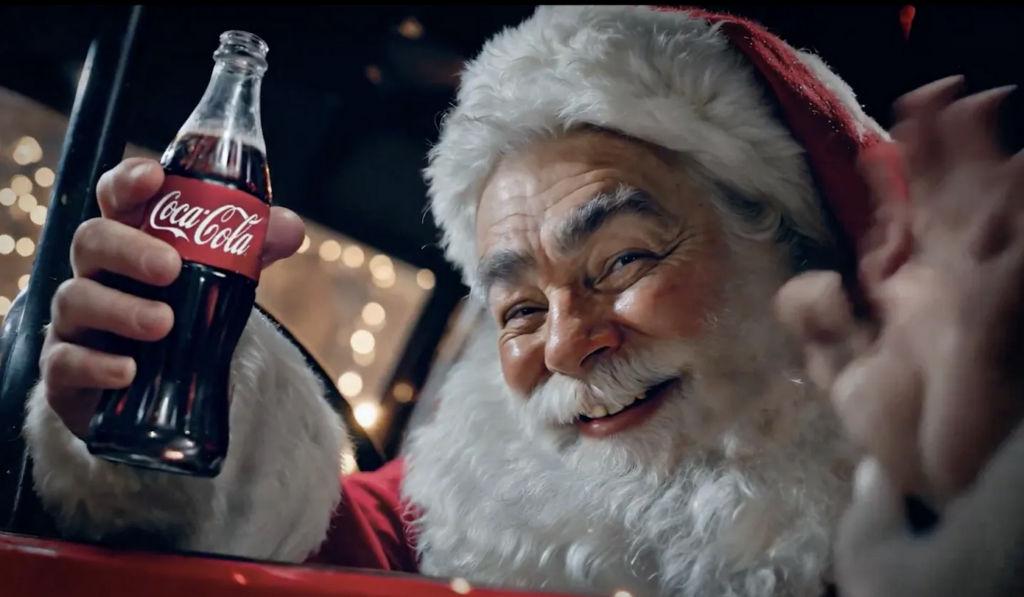
The backlash around AI-assisted campaigns, most notably from brands like Coca-Cola was never really about technology. It was about authorship.
People weren’t upset that machines were involved. They were unsettled by what seemed to be missing: intention, craft, and human presence.
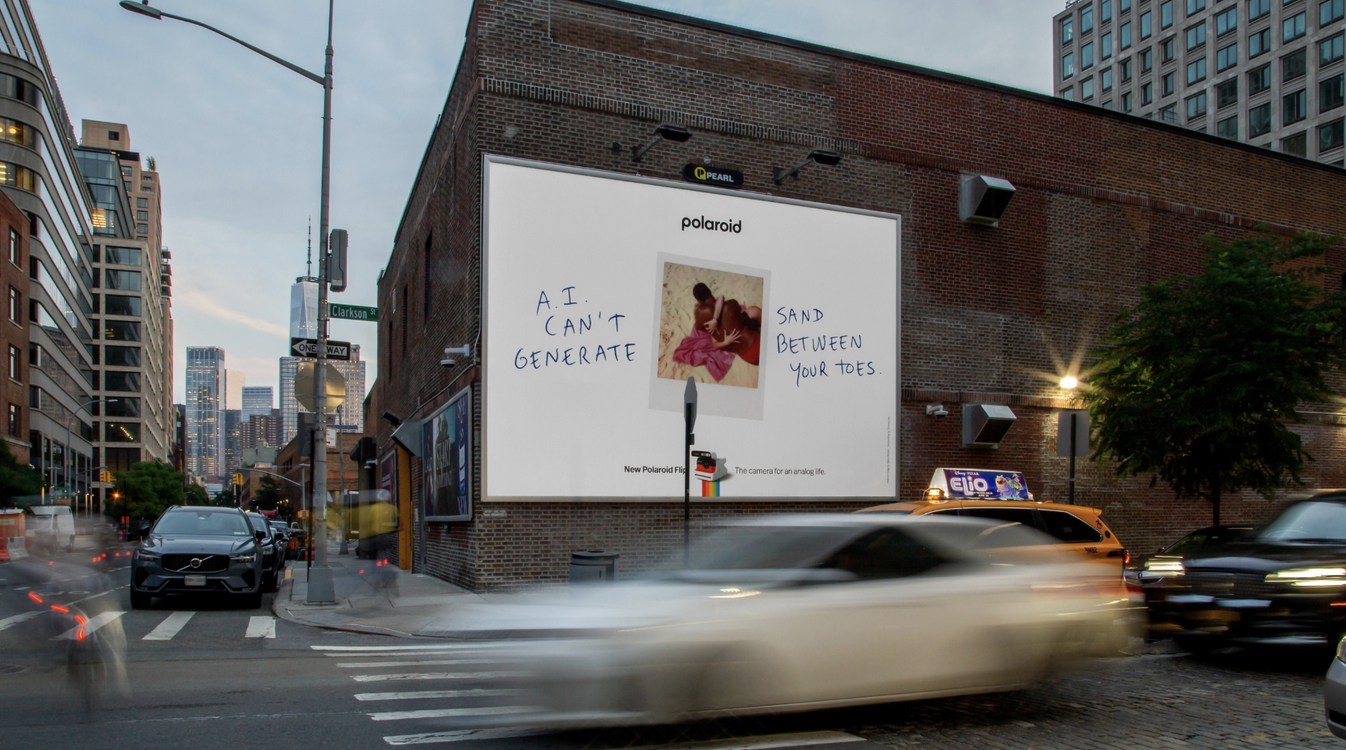
At the same time, a very different kind of campaign emerged from Polaroid with the launch of The Camera for an Analog Life, a creator-led effort that intentionally pushed back against screen fatigue, digital perfection, and algorithm-driven content. The campaign featured outdoor placements in cities like New York and London with handwritten-style messages such as “Real stories. Not stories & reels” and “No one on their deathbed ever said: I wish I’d spent more time on my phone,” urging passersby to step out of the digital glare and into real-world moments. It also activated physical experiences like phone-free walking tours in Paris, Tokyo, and London to deepen engagement. Polaroid Newsroom
Polaroid’s creative choice wasn’t nostalgic for nostalgia’s sake. It was strategic: creators and photographers were invited to interpret human experience visually, reflecting authentic, imperfect, lived life rather than pixel-perfect fantasy. This creator-led focus made the message feel claimed, not curated, grounded in the messy beauty of real moments rather than AI-optimized ideals. Polaroid Newsroom
For audiences weary of over-produced ads, Polaroid’s visual storytelling became a signal, not just a campaign. It reminded people that advertising can enchant not by showing what’s possible, but by honoring what’s real.
The message from audiences was unmistakable: How something is made now matters as much as what it says.
When Transformation Became a Brand Shortcut
Another fault line emerged in the way brands referenced wellness and transformation, particularly through cultural conversations around GLP-1 medications.
Some advertisers treated it as a clever metaphor. Others as shorthand for discipline or reinvention. Many missed the point entirely.
Health, body image, and self-worth are not abstract ideas. They are lived realities. Brands that flattened them into aspiration narratives were met with skepticism. Those that approached them with empathy were rewarded.
Advertising in 2025 learned an overdue lesson: relevance without sensitivity erodes trust.
AI Didn’t Break Advertising. It Exposed It.
If AI was the dominant tool of 2025, resistance to its misuse was the defining reaction.
Audiences quickly learned to recognize content that was technically impressive but emotionally vacant, work that could exist anywhere and therefore belonged nowhere.
The issue wasn’t automation.
It was anonymity.
The most effective campaigns of the year didn’t hide AI; they anchored it in human vision. AI succeeded when it supported storytelling, not when it replaced it.
Technology can scale creativity.
It cannot supply meaning.
Values Became Verifiable
Perhaps the most consequential shift of 2025 was this: brand values stopped being accepted at face value. Audiences cross-checked messaging against behavior: hiring practices, partnerships, silence, and retreat. Consistency became the new credibility.
Values were no longer something brands could activate.
They became something brands had to sustain.
What Europe and Africa Understood Early
While U.S. brands wrestled publicly with these tensions, important signals emerged elsewhere. In Europe, restraint, cultural nuance, and regulatory awareness produced work that felt intentional rather than inflated.
Across African markets, advertising thrived by leaning into local authorship, mobile-first storytelling, and community-rooted narratives. Culture wasn’t an aesthetic layer—it was the strategy.
The takeaway was universal: global scale without cultural fluency no longer works.
The Verdict on 2025
Advertising didn’t fail in 2025.
It was recalibrated.
Audiences reminded the industry of three enduring truths:
- Culture leads. Advertising follows.
- Human creativity remains irreplaceable.
- Representation and authorship are not moral gestures—they are strategic advantages.
At PICHA, this has long been the premise: images rooted in real communities, created by people telling their own stories, outperform generic content optimized only for speed.
Because people don’t connect with content.
They connect with meaning.
And in 2025, advertising was reminded of that—publicly.
